Warm-up and cool-down for different workouts: Exercises & tips
A good warm-up helps the body get started, while a cool-down and stretching give the body a smoother transition back to rest. Here we show different examples of warm-up and cool-down exercises for leg workouts, upper body training and running sessions.
Why is it important to warm up before a workout?
A warm-up prepares the body for training and activates the right muscle groups before your workout, which can also help you improve your technique during exercises.
When you warm up, blood circulation increases, the muscles become warmer and the joints get better mobility. This makes the body feel more ready for load, tempo and bigger movements.
Your warm-up does not need to be long. Often, 5 to 10 minutes is enough, depending on the type of workout you are doing and how your body feels that day.
Warm-up before a leg workout
What is the best way to warm up before a leg workout? Before leg training, it is good to focus on the hips, knees, ankles, glutes, thighs and core.
The goal is to activate these muscles and prepare the body for exercises such as squats, lunges, leg press and hip thrusts.
Here are examples of exercises you can do as a warm-up:
1. A few minutes of light cardio
For example:
Walk briskly on a treadmill
Cycle at an easy pace
Use a cross trainer
Jog lightly on the spot
2. Dynamic mobility exercises
Hip circles
Leg swings forwards and to the side
Deep bodyweight squats
Lunges with rotation
3. Activation exercises for the glutes and legs
Glute bridge
Side steps with a mini band
Bodyweight squats
Step ups on a low bench
3 minutes of easy cycling
10 leg swings per leg
10 bodyweight squats
10 glute bridges
10 lunges, 5 per leg
1 to 2 lighter sets of the first strength exercise
Leg workout inspiration
Stylish gym clothes for men & women
At Björn Borg you'll find complete workout sets for all your sessions. Explore our big range of gym clothes for men and sports clothing for women and find your favourites.
How do you warm up before an upper body workout?
A good warm-up for the upper body helps you get better muscle contact and create stability in the shoulders and shoulder blades.
Here it's important to focus on the shoulders, shoulder blades, thoracic spine, arms and core, so that you are warmed up for a workout that includes pressing exercises, rows, chin ups, shoulder presses and different arm exercises.
Example of a warm-up before an upper body workout
Start with light cardio and soft movements, such as:
Rowing machine at an easy pace
Arm circles
Light jogging with active arms
Continue with mobility and activation:
Shoulder circles
Band pull aparts with a resistance band
Face pulls with light resistance
Thoracic spine rotations: Start on all fours or kneel down, place one hand behind your head and gently rotate your upper body up towards the ceiling before switching sides.
Light push ups against a wall or bench
Warm up for arms, shoulders & back
Warm-up before arm training
• Arm circles forwards and backwards
• Light bicep curls with low weight
• Light tricep presses with a resistance band: Attach a resistance band above head height, keep your elbows close to your body and press your hands down until your arms are extended.
• Wrist circles
• 1 to 2 warm-up sets before heavier exercises
Warm-up before shoulder training
• Band pull aparts: Hold a resistance band in front of your body with straight arms and pull the band apart until your shoulder blades move together.
• Y raises with light weight: Stand slightly leaning forward or lie on your stomach and lift your arms diagonally upwards so your body forms a Y, using a low weight and controlled movement.
Warm-up before shoulder training
• Face pulls
• Shoulder rotations with a resistance band: Keep your elbow close to your body at a 90 degree angle and slowly rotate your forearm outwards or inwards against the resistance of the band.
• Shoulder presses without weight or with low weight
Warm-up before a back workout
• Rowing machine at an easy pace
• Thoracic spine rotations
• Light lat pulldowns
• Scapula pull ups
• Rows with a resistance band
• Dead bugs for core activation
Upper body workout inspiration
The best warm-up before a run
Before running, it is good to gradually raise your heart rate and prepare your legs, hips, calves and ankles.
The warm-up can also help you find a good running stride before increasing the pace. For more tips on running stride, read our articles about running technique and cadence here:
The higher the intensity of the run, the more important the warm-up becomes. Before an easy distance run, the warm-up can be simple, while intervals and faster sessions require a little more preparation.
Example of a warm-up before running
Start calmly:
• 5 minutes of brisk walking
• 5 minutes of light jogging
• Gradually increase the pace
Add dynamic running drills:
• High knees
• Butt kicks
• Leg swings
• Walking lunges
• Light skipping steps
Before intervals or faster running, you can also do:
• 2 to 4 strides. Here you can learn more and find tips for your running intervals.
• Short accelerations
• Light running drills. See our article about running technique for examples.
• Extra mobility for hips and calves. Do for example hip circles, deep bodyweight squats and calm calf rocks where you alternate between lifting and lowering your heels.
5 minutes of brisk walking or light jogging
10 leg swings per leg
20 metres of high knees
20 metres of butt kicks
2 short strides
Then start the workout at a controlled pace
How do you cool down after a workout?
After a workout, your heart rate is often high, your muscles are warm and your body is full of energy. By cooling down, you can lower the tempo gradually and give your body time to recover and go from activity to rest in a smooth and controlled way.
A cool-down can consist of light movement, calm breathing and stretching. It does not need to be advanced, a few minutes is enough.
Stretching after training is good for relaxing the muscles and maintaining or improving mobility. Focus on calm, static stretching where you hold each position for a while.
A simple rule is to hold each stretch for about 30 seconds and breathe calmly while doing it. It should feel like a clear stretch, but it should not hurt.
Cool-down and stretching after a leg workout
After a leg workout, the focus can be on the thighs, glutes, hips, calves and ankles. Start with a few minutes of light movement before stretching.
Good cool-down routine after a leg workout:
• 5 minutes of calm walking
• Easy cycling at a relaxed pace
• Deep breaths while your heart rate comes down
• Soft mobility exercises for hips and legs.
Move calmly through exercises such as leg swings, hip openers, light lunges and deep bodyweight squats.
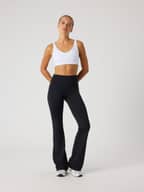

Front thigh stretch:
Stand up, grab one foot behind your body and gently pull your heel towards your glutes while keeping your knees close together.
Back thigh stretch:
Place one heel on the floor in front of you with a slightly bent knee, hinge forward from the hips and feel the stretch in the back of your thigh.
Hip flexor stretch:
Stand in a kneeling lunge with one knee on the floor and gently press your hips forward until you feel a stretch in the front of the hip.
Seated glute stretch:
Sit on the floor, place one ankle over the opposite knee and gently lean forward until you feel a stretch in your glutes.
Calf stretch against a wall:
Place your hands against a wall, step one foot behind you and press the heel towards the floor with the leg straight.
Child’s pose for hips and back
Kneel on the floor, sit your hips back toward your heels, stretch your arms forward and lower your chest toward the floor while breathing calmly.
Cool-down and stretching after an upper body workout
After an upper body workout, you can focus on shoulders, chest, back, arms and neck. This can feel especially nice after workouts with presses, rows, chin ups or a lot of shoulder training.
Stretching exercises after an upper body workout
• Chest stretch against a wall: Place your forearm against a wall at about shoulder height and gently rotate your body away from the wall until you feel a stretch across the chest.
• Cross body shoulder stretch: Bring one arm straight across your chest and use the other arm to gently pull it closer to your body.
• Overhead tricep stretch: Lift one arm above your head, bend the elbow so your hand moves behind your neck and gently press on the elbow with your other hand.
• Child’s pose
• Lat stretch with hands on a bench: Place your hands on a bench, step back with your feet and lower your chest towards the floor until you feel a stretch along the sides of your back.
• Gentle side neck stretch: Slowly tilt your head to one side towards your shoulder and let the opposite shoulder drop down, without pulling hard on the neck.
Cool-down and stretching after running
After running, it is good not to stop suddenly, especially after intervals or faster sessions. Let the body slow down step by step.
Cool-down after running
• 5 to 10 minutes of easy jogging or walking
• Deep breaths
• Light mobility for hips, calves and hamstrings
• Keep a calm pace until your heart rate drops
Stretching exercises after running
• Calf stretch
• Back thigh stretch
• Front thigh stretch
• Hip flexor stretch
• Glute stretch
Stretch after running
• Gentle lower back stretch: Lie on your back and gently pull your knees towards your chest, or let your knees slowly fall to one side while keeping your upper body on the floor.