- Outlet
Sustainability from idea to product
Denne artikkelen er på engelsk.
Have you thought about what a product has gone through before it reaches your hands? A whole chain of people puts all their energy into designing, producing and transporting your Björn Borg product as sustainably as we can.
What happens along the way from an idea for a garment, until you as a customer stand with the end result in your hands? How do we think sustainably?
Our sustainability work
At Björn Borg, we work a lot with sustainability (it's actually one of our three biggest focus areas) and have set high goals that we want to achieve. Our most important sustainability goal is that we will reduce our carbon footprint by 50% in absolute terms by 2030 from a 2020 base year.
Production and materials account for the largest part of our emissions. In 2021, these parts accounted for 89%. We constantly work hard to find better materials and production techniques, as well as better transport solutions for our products.
Here are just some of the sustainability goals and areas we are focusing on going forward:
100% more sustainably produced material for clothing
A plan to move to 0% airfreight
100% more sustainable materials or support of Better Cotton's mission in our bags by our autumn/winter collection 2025
To constantly work to find better solutions for more sustainable logistics
How will we achieve our goals?
We have clear working methods and a roadmap going forward to reach our goal of halving emissions by 2030. We have three clear focus areas:
Create a winning team – You as a consumer are an important driving force in putting pressure on other important partners. Our team consists of you, ourselves here at Björn Borg, our customers, and our partners in manufacturing and transport, among other things.
Decreasing footprint – We control our emissions with smarter production and logistics solutions, and of course also our own emissions in stores, cars and offices. We look at both materials and manufacturing, transport and direct emissions.
Compliance – Compliance is in many ways the core of our sustainability work. Complying with requirements and both national and international laws and regulations are the very foundations of our work. It sets demands and keeps us on our toes to constantly develop and be one step ahead.
Ideas with a long-term perspective in focus
Our goal to provide you with more sustainable products begins with our belief in a classic timeless design.
We pride ourselves on offering long lasting quality products. We choose materials and control the production of our garments with the greatest care and the products are designed and produced to last a long time.
The work is carried out at all levels with great passion and love. Only together can we achieve our goals. Dare to try new things, to encourage and strengthen each other and contribute with a winning attitude – that is our recipe for sustainable and long-term success, both socially and from an environmental point of view.
Choice of material
All our materials are carefully selected. When we at Björn Borg talk about sustainably produced products, our definition means that at least 70% of each garment is either made from a more sustainable material - or supports Better Cotton, an initiative that works to improve cotton cultivation globally.
Choosing more sustainable materials and manufacturing processes for example dyeing and printing is one of the best tools we have to reduce the carbon footprint, but also to reduce the consumption of water, energy and chemicals.
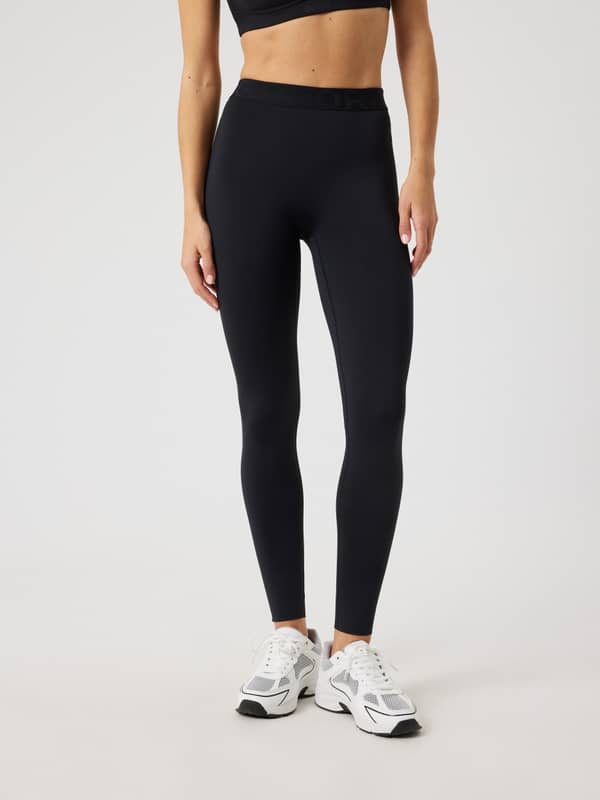
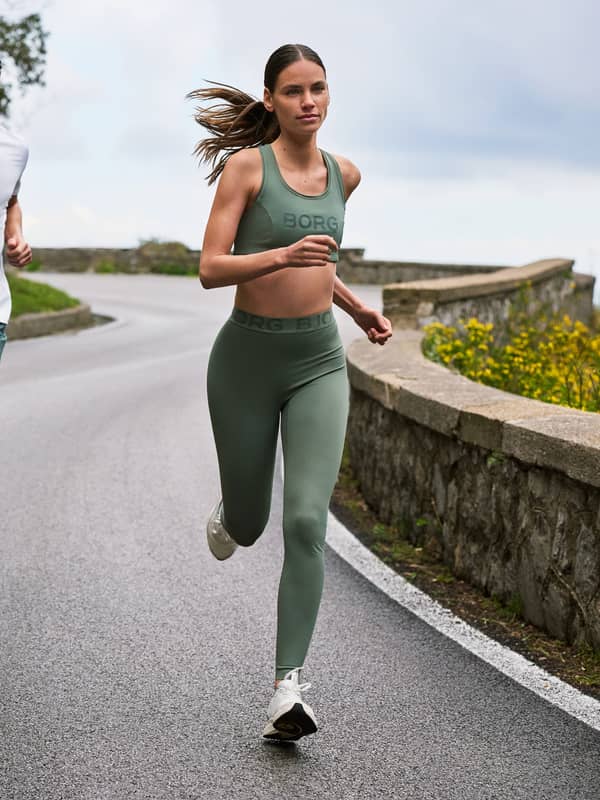
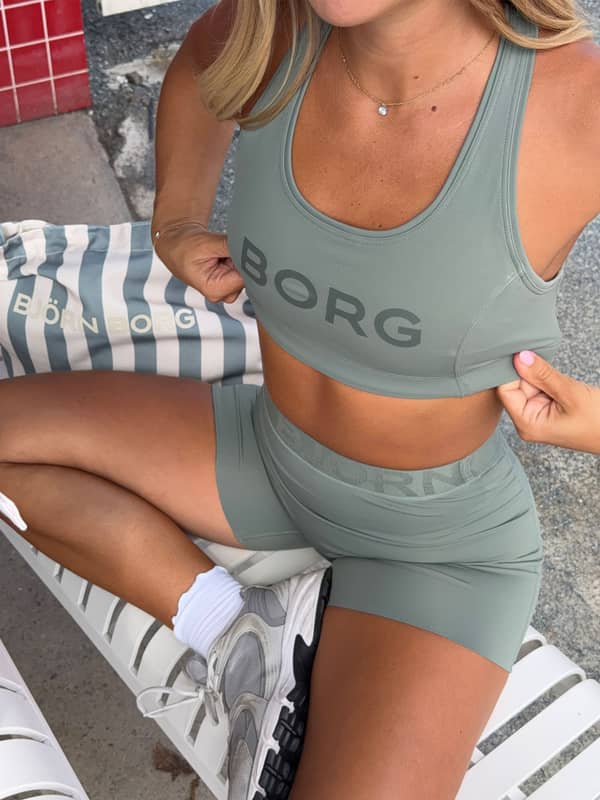
A large part of the materials in our products are recycled. We have a lot of recycled fibers as a better choice to regular polyamide and polyester. Recycled polyamide is made from plastics from the sea and from industrial waste.
Produkter i återvunnen polyamid




- -20%
- Outlet
- -20%
- Outlet

- Outlet
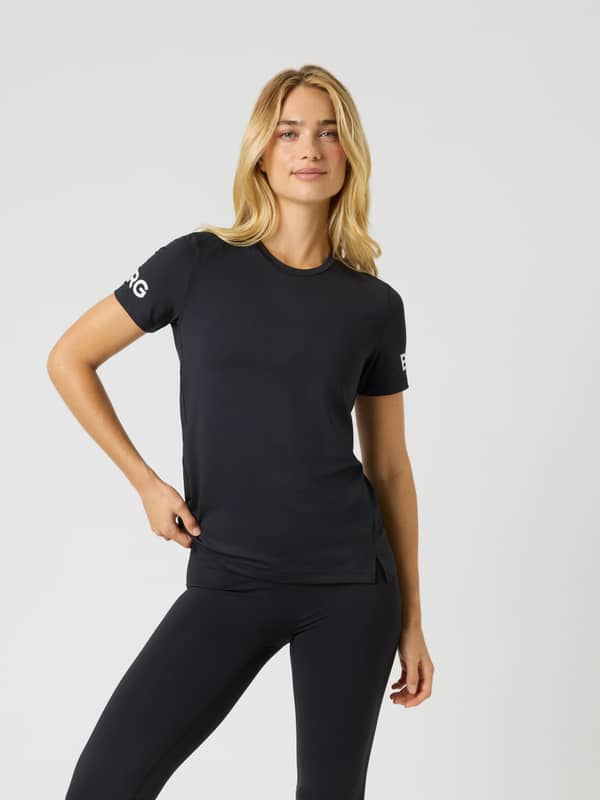
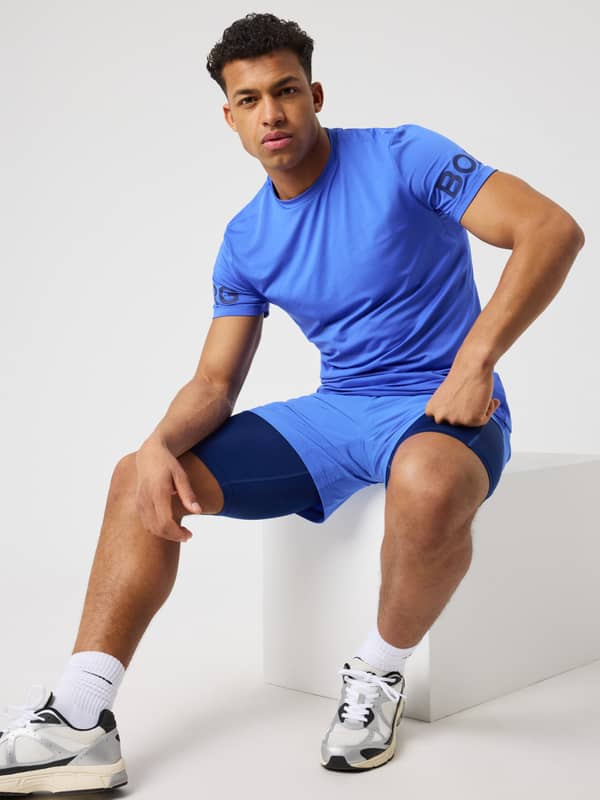
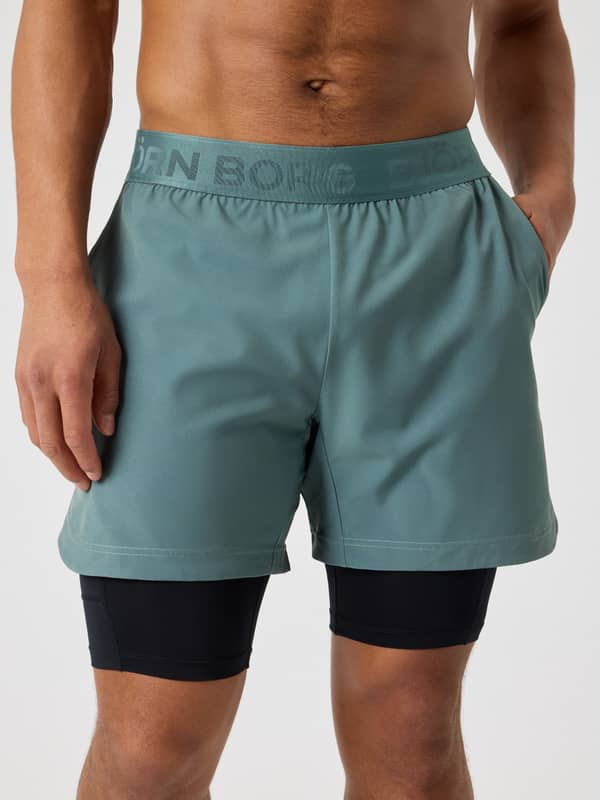
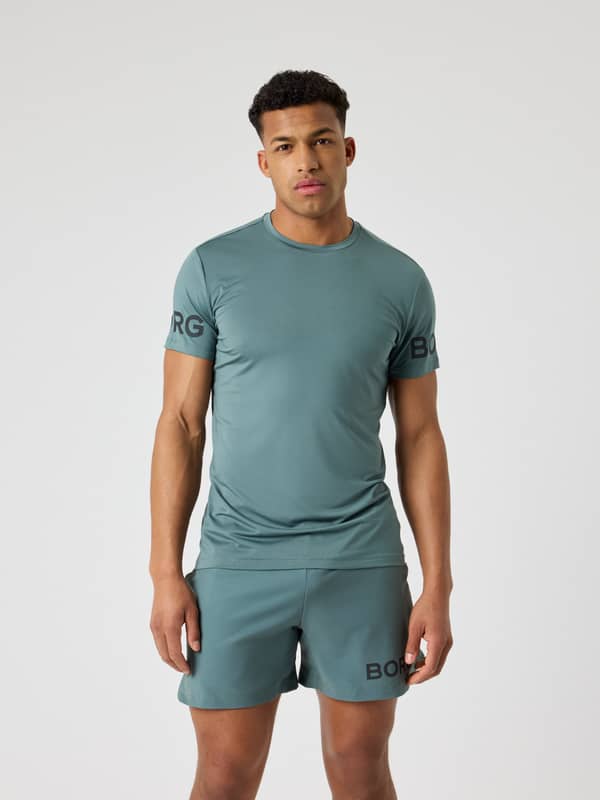
Recycled polyester is another example of material with recycled fibers, here the material is mainly made from PET bottles.
- -20%
- Kun få igjen



- -20%
- Outlet
- -20%
- Kun få igjen

- -20%
- Kun få igjen
Sustainability with Susanna
Susanna works as Head of Product Development at Björn Borg.
What is a sustainable garment for you?
- A sustainable garment for me is a garment that lasts a long time and that can live in my wardrobe for many years. I prefer garments that I can style in many ways and that will be used over time. That is also what I like about our garments at Björn Borg, that they are of high quality and have a timeless design.
Do you have any tips for those who want to buy more sustainable clothes?
- Buy good quality and you should be able to wear them a lot. It pays off in the long run. Read a bit on the brands' website about which more sustainable materials they use, or ask the store staff. Not infrequently, products are marked with various certifications that can guide you to a better choice.
The customer has a great responsibility when it comes to buying quality and taking care of their clothes in a good way, to follow washing instructions and not to wash unnecessarily. It takes both energy and wears on the clothes. Recycle garments you no longer want to use in one of the many circular solutions available.
What kind of goals do you have going forward when it comes to green goals in your work?
- I want to keep up-to-date on what is happening in sustainability and collaborate with other industry colleagues to find good ways forward when it comes to materials, processes and energy in the factories. We make garments that are washed often, which means a lot of energy and water use. We try to encourage consumers to handle the garments in a way that reduces the environmental footprint and extends their lifespan.
Feel free to take a short break here and reflect on your goals, what is your focus going forward and what will be your green goals? Think both at work and privately.
What does the sustainability work look like when it comes to the design process, material selection and the function of the garments?
- Sustainability begins with design and a long-term commitment to ensure that our collections last far beyond temporary trends. We make conscious choices in the design process to avoid unnecessary consumption of fabric and trim and to ensure highly functional and sustainable products. Our design and pattern team has adopted digital tools to increase efficiency in product development and reduce the number of physical samples made.
Quality controls for a longer product life
- In addition to design, our production team performs detailed quality checks to ensure that the products we launch have the longest possible lifespan. Fabrics are tested in a lab during various stages of production, giving them a rating and a test report. Wear and wash tests are also carried out to see how the product, fabric and clothing work in reality.
When it comes to testing, we also wear-test garments on our colleagues in the office, for example during our sports hour - simply the best testers in action.
Great focus on water-saving techniques
Chemical and water management is critical to the safe use and handling of our products for both people and the environment. At Björn Borg, we have focused our water-reducing work on product level. Whenever possible, we use printing and dyeing techniques that require no or reduced amounts of water in our range. We have ongoing projects to use more fabrics dyed with water-saving techniques.
A thorough chemical management program
Manufacturing of fabrics and accessories requires the use of chemicals, especially in dyeing and printing processes. We have a thorough chemical management program to ensure that our products do not contain harmful substances. We apply a Restricted Substances List (so-called RSL) which is used as a type of chemical checklist when testing finished products. We also use an MRSL (Manufacturing Restricted Substance List), which is a restricted list of substances used in raw material and product manufacturing processes. All suppliers must sign and comply with these.
We do chemical tests on a product from each supplier every major season. This product is selected after a risk analysis that takes into account the risk of hazardous chemicals being added due to value-added properties of the garment, the amount sold of the garment, new subcontractors and several other factors.
Recycling cooperation with Sysav
During 2021, we entered into a collaboration with Sysav textile sorting facility Siptex in Malmö. Here we send discarded garments as development samples and returns from customers that for some reason cannot be sold back. The textiles are recycled into raw materials and further into new fabrics.
Can you give an example of a production technique/process you want to highlight that makes a big difference to sustainability and the environment?
- High IQ® Lasting Color ECO (Avitera). High IQ® uses AVITERA SE technology. It is a revolutionary dye that saves up to 50% water, energy and CO2 emissions during the dyeing process compared to conventional dyes.
The color stays sharp and does not fade away, dark and light colors stay intense throughout the life of the garment, wash after wash.
Below you can see some of the garments from our popular Centre collection, where the technology High IQ® Lasting Color ECO (Avitera) was used.
The product's path to the end customer
Production accounts for 89% of our total emissions. Transport accounts for 8% (2021). The manufacturing of products has a big impact, but transport is also an important category to look at. Here, too, we are working to find solutions such as a transition from air freight to low-emission alternatives.
We track all our deliveries and use almost exclusively road and sea transport.
No scheduled air transport
Did you know we never schedule air transport? If a delivery is delayed, we always try to find alternative solutions. Starting in 2022, all air transport must be approved by the management team.
Björn Borg employees always try to find an alternative means of transport to air when it comes to business trips, for example by train or choosing leasing cars with fossil-free fuels.
One central warehouse
We have one central warehouse, which is positive in many ways, especially when it comes to the environment. Our warehouse Nowaste Logistics is environmentally certified and recycles organic waste into biogas. In 2021, 89.64 tons of biogas, equivalent to 7,000 liters of gasoline, were produced from the waste.
Our packaging
All our product packaging, hangtags and shipping boxes are made from a mix of materials from responsibly managed forests as well as recycled or controlled wood.
Custom-made shipping boxes for glasses
Shipping boxes and bags for our glasses are custom made for a precise number of items to avoid shipping air. All glasses are supplied in cornstarch bags and the number of bags is two instead of four, which is the industry standard. Our glasses cases are delivered without plastic bags and wrapped in wax paper, should they need to be protected.
ÅterBära™ certified bags
A couple of years ago, we also replaced the previously used shipping boxes for our webshop shipments with ÅterBära™ certified bags. These are made from recycled material and are 100% climate compensated. Read more about our packaging and materials in stores here.
The garment's life cycle
Did you know that one of the best ways to reduce your textile environmental footprint is to use your clothes longer? We always design with a focus on high quality and timeless design. We create garments that have a long lifespan based on both material selection and fit.
How can you as a customer think sustainably about your clothes when you have bought them?
How can you keep them in the loop as long as possible? Maybe at the same time as you bought something new, it's also time to do a closet cleaning at home? Here we have some tips for you:
Wash gently, here you can get tips and environmentally friendly washing advice
Sell or donate clothes you no longer use to charity
Fix and redesign garments instead of throwing them away, both unique and fun
Recycle your clothes so that they become new materials and get further life